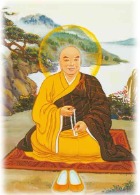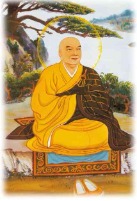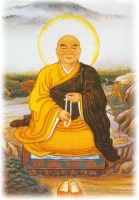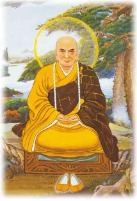
美東淨宗學會 Pure Land Buddhist Association

淨土宗

淨宗入門
淨宗入門
An Introduction to the Pure Land School

佛陀教學,善巧方便,隨眾生根機,應病與藥。佛在《大集經》中告訴我們:「正法時期,戒律成就」;「像法時期,禪定成就」;「末法時期,淨土成就」。末法一萬年,眾生根機漸次低下,外有誘惑,內有煩惱,想要修行證果愈來愈困難。佛陀慈悲,為生在末法時期的我們指出淨土這條明路,一條「萬修萬人去」的歸路。

釋迦牟尼佛說法四十九年,講經三百餘會,幾乎每一會都提到淨宗的殊勝。佛所說的一切經,最後都匯歸到《華嚴經》,而《華嚴經》末後則以普賢菩薩十大願王導歸極樂。極樂世界是修行最圓滿、最究竟的皈依處,淨土法門則是整部《大藏經》的歸宿。

「淨土宗」因專修往生阿彌陀佛淨土法門而得名。始祖慧遠曾在廬山建立蓮社,提倡往生淨土,故又稱蓮宗。實際創立者為唐代善導。歷代祖師並無前後傳承的法統,均為後人據其弘揚淨土的貢獻推戴而來。按近代印光所撰《蓮宗十二祖贊》,以慧遠、善導、承遠、法照、少康、延壽、省常、袾宏、智旭、行策、實賢、際醒為蓮宗十二祖。其後印光也被門下推為第十三祖。

The Buddha taught with skillful means, matching the teaching to the person. In the Great Collection Sutra he said that in the true Dharma age accomplishment comes through the precepts; in the semblance Dharma age, through meditation; and in the Dharma-ending age, through the Pure Land. For the ten thousand years of this last age, capacities decline, temptations press from outside, and afflictions rise from within, so realization grows harder. Out of compassion the Buddha pointed to the Pure Land — a way home of which it is said that all who truly practice it arrive.

Over forty-nine years and more than three hundred assemblies, Shakyamuni spoke of the excellence of the Pure Land in nearly every one. All the sutras gather at last into the Avatamsaka, and the Avatamsaka ends with Samantabhadra’s ten great vows leading to Ultimate Bliss. That land is the most complete refuge, and the Pure Land door is where the whole canon comes to rest.

The school takes its name from exclusive practice for rebirth in Amitabha Buddha’s land. Because the first patriarch, Huiyuan, founded a lotus society on Mount Lu, it is also called the Lotus School. The one who actually established it was Shandao in the Tang. The patriarchs were not a formal lineage passed from teacher to disciple; later generations honored each for what he did to spread the teaching. In his Praise of the Twelve Patriarchs of the Lotus School, Yinguang names Huiyuan, Shandao, Chengyuan, Fazhao, Shaokang, Yanshou, Shengchang, Zhuhong, Zhixu, Xingce, Shixian, and Jixing. Yinguang’s own students later honored him as the thirteenth.

The Origins of the Amitabha Buddhist Society

Empathizing with the suffering of all sentient beings, Buddha Shakyamuni came to our world to teach people how to transcend both that suffering and the cycle of birth and death. His goal was to enable all beings to understand his teachings, to become enlightened. In our Dharma Ending Age, our negative karma is very strong, creating many obstacles to our way of practice. Lacking wisdom and good fortune, it is extremely difficult for us to find a good teacher who can guide us and properly explain the Buddha’s teachings. Knowing all this, the Buddha taught a special method for the beings of our time, this Pure Land method.

As the famous late Buddhist scholar Mr. Guang-Xi Mei once said, “If we can accept and uphold the Pure Land teachings, not only will we eradicate future sufferings, but we could attain peace of mind now. People who do not sincerely cultivate pure conduct will never be able to understand or experience the happiness of the practice of this wondrous method. Likewise, those who do not practice the teachings will never realize their profundity. If we wish to spread the Buddha’s teachings in this age, it is definitely necessary to advocate the Pure Land teachings.”
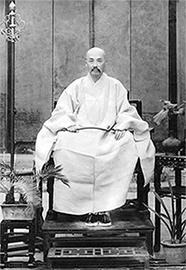
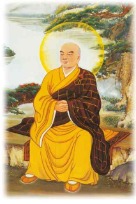
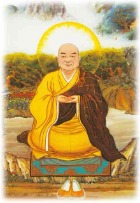
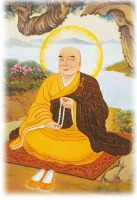
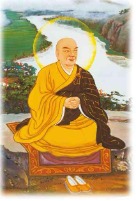
Portrait accompanying the Origins of the Amitabha Buddhist Society

Amitabha Buddhist Societies were proposed for the first time after World War II, when the respected Mr. Lian-Ju Xia, an eminent Buddhist teacher, began promoting the exclusive study and cultivation of the Pure Land School. Master Chin Kung, with over forty years of experience in propagating Buddhism, also deeply understands that the Pure Land teachings are the foremost method for helping sentient beings. In recent years, he has tirelessly lectured around the world, primarily in Asia, Australia and North America.

He has funded the free worldwide distribution of books and tapes on Buddhism, ethics and morality, and Chinese Classics. It is his heartfelt wish to help in the establishment of independent Amitabha Buddhist Societies all over the world. He respectfully hopes these organizations will extensively promote proper education, explain the Law of Cause and Effect, generate the Bodhi mind and encourage all people to chant Buddha Amitabha’s name and vow to be born into the Pure Land.

The guideline for fellow practitioners of these societies is to cultivate according to the five Pure Land sutras and one sastra, the Infinite Life Sutra, the Amitabha Sutra, the Visualization Sutra, the “Chapter of Universal Worthy Bodhisattva’s Conduct and Vows”, the “Chapter on the Perfect and Complete Realization of Great Strength Bodhisattva”, and Vasubandhu Bodhisattva’s Report. We emphasize the importance of our practice complementing our understanding, and that we carry out our vows in accordance with the Five Guidelines of the Three Conditions, Six Principles of Harmony, Three Learnings, Six Paramitas, and the Ten Great Vows.

The first of the Three Conditions includes being filial and respectful toward our parents, teachers and elders, being compassionate and not killing any living beings, and following the Ten Good Conducts. The second of the Three Conditions includes taking the Three Refuges, observing precepts, laws and customs, and conducting ourselves in a proper and dignified manner. The third includes generating the awakening mind, deeply believing in the Law of Cause and Effect, reciting and upholding Mahayana Sutras and encouraging others to advance on the path to enlightenment.

Second, the Six Harmonies includes sharing the same viewpoints and goals, observing the same rules, living and practicing together harmoniously, not quarrelling, experiencing the inner peace and happiness from practicing together and sharing benefits harmoniously.

Third, the Three Learnings are self-discipline, deep concentration and wisdom. Fourth, the Six Paramitas are giving, self-discipline, patience, diligence, deep concentration, and wisdom.

Fifth and last, the Ten Great Vows are as follows: First is to respect all people and treat everything with care. Second is to praise all the virtues and kind practices of others. Third is to practice giving respectfully. Fourth is to feel deep remorse for our faults, which obstruct us from seeing our true nature and to vow not to commit them again. Fifth is to rejoice in the virtuous deeds of others and not harbor jealousy. Sixth is to request for those with true practice to widely propagate the teachings. Seventh is to ask teachers to remain by our side in guidance. Eighth is to forever hold the Buddha’s teachings in our hearts. Ninth is to accord with conditions and people around us. Tenth is to dedicate the peace and happiness gained from practicing the above deeds to all living beings, hoping that they will attain the unsurpassed understanding.

We would do well to chant Buddha Amitabha’s name single-mindedly without doubt, without intermingling with other methods or thoughts, and without interruption, to seek birth into the Western Pure Land and to return to our world and help others.

It is our sincere hope that people will recognize that the cause of our problems originates from our polluted minds. We would do well to turn back from delusion, from our false beliefs and our improper viewpoints. If we truly wish our future to be filled with loving-kindness and compassion, we will follow the guidance of the Infinite Life Sutra, “Wherever the Buddha’s teachings have flourished, either in cities or countrysides, people would gain inconceivable benefits. The land and people would be enveloped in peace. The sun and moon will shine clear and bright. Wind and rain would appear accordingly, and there will be no disasters. Nations would be prosperous and there would be no use for soldiers or weapons. People would abide by morality and accord with laws. They would be courteous and humble, and everyone would be content without injustices. There would be no thefts or violence. The strong would not dominate the weak and everyone would get their fair share.” If we would read and follow the teachings of this sutra, then we will give rise to wisdom, reduce our negative karmas, live a long, healthy and happy life. Furthermore, if this sutra could be widely distributed and accepted, then people would become kinder and gentler. This sutra is the key to solving all of our problems and to establishing world peace.

We establish the Amitabha Buddhist Societies for practitioners to follow the Five Guidelines and accord with the teachings of Master Chin Kung to practice the Pure Land method and to study the Infinite Life Sutra. With these, we will be able to repay the kindness shown to us by the Buddhas, our country, our parents and teachers and all sentient beings. We will also be able to help all those who remain in suffering. We have before us a rare and precious opportunity, one not encountered in infinite aeons. Fellow cultivators, we need to harbor the mind of true sincerity, purity, equality, understanding and compassion to see through, let go, attain freedom, accord with conditions and be mindful of Buddha Amitabha, to follow his teachings and vow to be born into the Western Pure Land.

Respectfully,
Yin Han, Former President
Hwa Dzan Buddhist Library
January 1, 1993
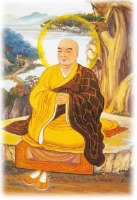
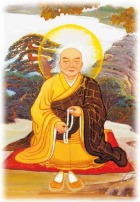
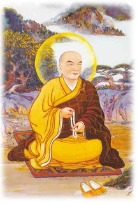
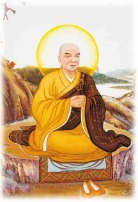
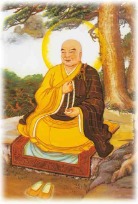
十三祖

淨土宗十三代祖師,後人依其弘揚淨土的貢獻推戴而來。點開可讀生平。

The thirteen patriarchs were honored by later generations for what each contributed to the Pure Land teaching. Open a card to read the life.

慧遠大師

初祖

慧遠大師

334–416

東晉僧。廬山白蓮社創始者,與劉遺民等百餘人共期往生西方。

First Patriarch

Master Huiyuan

334–416

An Eastern Jin monk. On Mount Lu he founded the White Lotus Society, and with more than a hundred companions vowed rebirth in the West.

閱讀全文 收起

慧遠,雁門樓煩(今山西崞縣)人,俗姓賈。十三歲遊學許昌、洛陽,博通六經與老莊。二十一歲,偕弟慧持在太行恆山聽道安講《般若經》,感嘆儒道九流皆如糠秕,遂與弟一同剃度。他精於般若性空之學,二十四歲即登講席,常引《莊子》說明佛教實相,道安因而特許他不廢俗書。

東晉太元六年(381)南下廬山,住東林寺。他慨嘆江東經典未備、禪法不聞、律藏殘缺,派弟子遠尋眾經。太元十六年迎罽賓沙門僧伽提婆,譯出《阿毘曇心論》、《三法度論》。聞鳩摩羅什入關,又遣道生、慧觀等赴長安,並以書信與羅什往返論義。弟子曇邕參與譯出《十誦律》;他又請佛陀跋陀羅在廬山譯出《達摩多羅禪經》。弘揚大乘般若的同時,也提倡小乘禪數之學。

元興元年(402),與劉遺民等百餘人創立白蓮社,專以淨土念佛為行門,共期往生西方,三十餘年未曾出山。元興二年桓玄令沙門敬拜王者,他著《沙門不敬王者論》,主張出家眾不必屈服於王權。廬山東林寺當時是南方佛教中心,與羅什所在的長安中分天下。義熙十二年示寂,世壽八十三。唐、宋諸帝賜諡「辨覺大師」、「正覺大師」、「圓悟大師」等。為別於隋代淨影寺慧遠,後世多稱「廬山慧遠」。

Huiyuan was from Loufan in Yanmen (present-day Guo County, Shanxi), of the Jia family. At thirteen he studied in Xuchang and Luoyang and mastered the Six Classics and the books of Laozi and Zhuangzi. At twenty-one, with his younger brother Huichi, he heard Daoan teach the Prajna sutras on Mount Heng in the Taihang range. He sighed that the Confucian and Daoist schools were so much chaff, and the brothers ordained. Trained in the teaching of emptiness, he was lecturing by twenty-four, often using the Zhuangzi to explain ultimate reality. Daoan then allowed him to keep reading non-Buddhist books.

In 381 he went south to Mount Lu and lived at Donglin Temple. Finding the scriptures of the south incomplete, meditation untaught, and the vinaya fragmentary, he sent disciples to seek texts. In 391 he welcomed the Kashmiri monk Sanghadeva, who translated Abhidharma works. When Kumarajiva entered Chang'an, Huiyuan sent Daosheng, Huiguan, and others to study with him, and the two masters corresponded. His disciple Tanyong joined the translation of the Ten Recitations Vinaya, and he invited Buddhabhadra to Mount Lu to translate a meditation manual. Alongside Mahayana prajna he also taught the meditation and numerical analysis of the lesser vehicle.

In 402, with Liu Yimin and more than a hundred others, he founded the White Lotus Society, taking Pure Land recitation as their practice and vowing rebirth in the West. For more than thirty years he did not leave the mountain. When Huan Xuan ordered monks to bow to the ruler, Huiyuan wrote A Monk Does Not Bow Before a King, arguing that the renunciant community need not submit to royal power. Donglin was then the Buddhist center of the south, balancing Kumarajiva's Chang'an. He died in 416 at eighty-three. Tang and Song emperors granted him posthumous titles. To distinguish him from the Sui-dynasty Huiyuan of Jingying Temple, later generations call him Lushan Huiyuan.

善導大師

二祖

善導大師

613–681

唐代僧。集曇鸞、道綽一系之大成,專修念佛,世稱彌陀化身。

Second Patriarch

Master Shandao

613–681

A Tang monk who brought together the line of Tanluan and Daochuo. He practiced Buddha-recitation alone, and people called him an emanation of Amitabha.

閱讀全文 收起

善導,山東臨淄(一說安徽盱眙)人,俗姓朱,號終南大師。幼年投密州明勝法師出家,誦《法華》、《維摩》等經。後得《觀無量壽經》,悲喜交集,修習十六觀。貞觀十五年(641)赴西河玄中寺謁見道綽,修學方等懺法,並聽講《觀經》,此後專事念佛,得念佛三昧,於定中親見淨土莊嚴。其後入長安光明寺,傳淨土法門。

他行持精嚴,日常合掌趺坐,一心念佛,至力竭方休。三十餘年不別定寢處,不舉目視女子,不受沙彌禮拜,遠避名利。好衣美食都送大廚供養大眾,自己吃粗食。以所受布施書寫《阿彌陀經》十萬卷,畫淨土變相三百幅;見塔廟損壞,必為修復。或有人誦《彌陀經》十萬至三十萬遍,或日課佛號一萬至十萬聲。世人稱他為「彌陀化身」。高宗時,洛陽龍門大盧舍那佛像興造,他擔任檢校。

永隆二年(681)三月示寂,世壽六十九。一說是在光明寺前柳樹上自縊捨生。葬於長安城南神禾原。門人有懷感、懷惲、淨業等。著有《觀無量壽佛經疏》四卷、《淨土法事讚》二卷,以及《觀念法門》、《往生禮讚偈》、《般舟讚》等。一九〇九年,日本學者在高昌故址附近發現《往生禮讚偈》與《阿彌陀經》斷片,後者附有他的發願文,或即他所書十萬卷之一。《觀經四帖疏》八世紀傳入日本,法然依之創立日本淨土宗,尊善導為高祖。

Shandao was from Linzi in Shandong (some say Xuyi in Anhui), of the Zhu family, and was called the Master of Zhongnan. As a child he ordained under Master Mingsheng of Mizhou and recited the Lotus and Vimalakirti sutras. When he obtained the Contemplation Sutra he was moved to tears and joy and cultivated the sixteen contemplations. In 641 he went to Xuanzhong Temple in Xihe to see Daochuo, practiced the fangdeng repentance, and heard the Contemplation Sutra. Thereafter he recited the Buddha's name exclusively, attained nianfo samadhi, and saw the adornments of the Pure Land in meditation. He then taught the Pure Land door at Guangming Temple in Chang'an.

His conduct was strict. He sat with palms joined and recited until his strength gave out. For more than thirty years he kept no fixed lodging, did not raise his eyes to look at women, did not receive bows from novices, and kept clear of fame and profit. Fine clothes and food he sent to the kitchen for the community; he himself ate coarse fare. With offerings he copied the Amitabha Sutra a hundred thousand times and painted three hundred transformation tableaux of the Pure Land, and he repaired any shrine he found in disrepair. Some of those he taught recited the sutra a hundred thousand to three hundred thousand times, or the name ten thousand to a hundred thousand times a day. People called him an emanation of Amitabha. Under Emperor Gaozong he served as inspector when the great Vairocana was raised at Longmen in Luoyang.

He died in the third month of 681 at sixty-nine. One account says he gave up his life by hanging from a willow in front of Guangming Temple. He was buried on the Shenhe Plain south of Chang'an. His disciples included Huigan, Huiyun, and Jingye. His works include a four-fascicle commentary on the Contemplation Sutra, a two-fascicle liturgy, and several shorter texts on recitation and rebirth. In 1909 Japanese scholars found fragments of his Praise of Rebirth and of the Amitabha Sutra, the latter with a vow in his name, near the old city of Gaochang — perhaps one of the hundred thousand copies. The four-fascicle commentary reached Japan in the eighth century. Honen founded the Japanese Pure Land school upon it and honored Shandao as its patriarch.

承遠大師

三祖

承遠大師

712–802

唐代僧。居衡山巖下,茅舍名「彌陀臺」,專修般舟念佛。

Third Patriarch

Master Chengyuan

712–802

A Tang monk. He lived beneath a cliff on Mount Heng, called his hut the Amitabha Terrace, and practiced pratyutpanna recitation.

閱讀全文 收起

承遠,漢州(四川廣漢)人,俗姓謝。始居衡山西南巖石下。有人送食就吃,沒有就吃泥土,形容憔悴,自己負薪。所居茅舍稱為「彌陀臺」,在那裡專修般舟念佛。日久之後,遠近都知道他,前來受教的人以萬計。代宗法照國師就是他的門人。代宗也曾前來參禮,先後賜其道場「般舟道場」之號與「彌陀寺」之額。

貞元十八年入寂,世壽九十一。柳宗元為他撰碑,立在寺門之右。門弟子千餘人,其中以法照、日悟、惠詮、知明、超明最為著名。

Chengyuan was from Hanzhou (Guanghan, Sichuan), of the Xie family. He first lived under a cliff on the southwest of Mount Heng. If someone brought food he ate; if not, he ate earth. Worn and unkempt, he carried his own firewood. His thatched hut was called the Amitabha Terrace, and there he practiced pratyutpanna Buddha-recitation. In time people came from far and near, and those who received his teaching were counted in the tens of thousands. National Teacher Fazhao, of Emperor Daizong's reign, was his disciple. Daizong himself came to pay respects and bestowed on the place the titles Pratyutpanna Way-place and Amitabha Temple.

He died in 802 at ninety-one. Liu Zongyuan wrote the stele, set to the right of the temple gate. He had more than a thousand disciples; Fazhao, Riwu, Huiquan, Zhiming, and Chaoming were the best known.

法照大師

四祖

法照大師

唐代

又稱五會法師。創五會念佛,往來五臺與長安,從宮廷到民間都修此法。

Fourth Patriarch

Master Fazhao

Tang dynasty

Called the Master of the Five Assemblies. He established five-tempo recitation and taught it from the court to ordinary people, between Wutai and Chang'an.

閱讀全文 收起

法照,生卒年與籍貫不詳,又稱五會法師。代宗永泰年中遊東吳,因慕慧遠而入廬山,修念佛三昧。一日在禪定中蒙佛開示,遂往南嶽師事承遠。大曆元年(766)在彌陀臺發願,每夏以九十日勤修般舟三昧,同年受五會念佛誦經之法。次年棲止衡州雲峰寺。一日粥缽中忽然現出五彩祥雲,雲內現大聖竹林寺;他日又在缽中見到五臺山諸寺與淨土勝相。

大曆四年夏,在湖東寺(一作湘東寺)高樓臺修五會念佛,感見阿彌陀佛及文殊、普賢。次年四月到五臺山佛光寺,有二童子引路,所見正是先前缽中的景物。普賢、文殊授他念佛要門。他在當地立碑,令見聞者發菩提心。此後往來五臺與長安,創五會念佛,從宮廷到一般社會都廣行念佛。示寂後敕諡「大悟和尚」。或謂他是善導再來,尊為蓮宗第四祖。

Fazhao's dates and birthplace are unknown. He is called the Master of the Five Assemblies. During the Yongtai era of Emperor Daizong he traveled in the east, then entered Mount Lu out of admiration for Huiyuan and cultivated nianfo samadhi. Once, in meditation, the Buddha directed him to study with Chengyuan at Nanyue. In 766, at the Amitabha Terrace, he vowed to keep a ninety-day pratyutpanna retreat each summer, and that same year he received the method of five-assembly recitation and sutra chanting. The next year he stayed at Yunfeng Temple in Hengzhou. One day five-colored clouds appeared in his porridge bowl, and within them the Great Sage's Bamboo Grove Temple; another day the bowl showed him the monasteries of Mount Wutai and scenes of the Pure Land.

In the summer of 769, at Hudong Temple (also called Xiangdong), he practiced five-assembly recitation on a high terrace and saw Amitabha together with Manjusri and Samantabhadra. In the fourth month of the next year he reached Foguang Temple on Wutai. Two children led him, and he found the very scenes he had seen in the bowl. Manjusri and Samantabhadra gave him the essentials of Buddha-recitation. He raised a stele there so that those who saw or heard of it would give rise to bodhicitta. Thereafter he traveled between Wutai and Chang'an. Five-assembly recitation spread from the court to ordinary society. After he died he was granted the title Monk of Great Awakening. Some say he was Shandao come again, and he is honored as the fourth patriarch of the Lotus School.

少康大師

五祖

少康大師

–805

以一錢買一聲佛號,教化孩童。人稱後善導。

Fifth Patriarch

Master Shaokang

–805

He gave a coin for each recitation of the Buddha’s name and so taught the children. People called him the later Shandao.

閱讀全文 收起

少康,縉雲(浙江)仙都山人,俗姓周。七歲出家,十五歲在越州嘉祥寺受戒,廣誦經論。後於洛陽白馬寺讀到善導的〈西方化導文〉,決心專修念佛。他把乞食所得的錢給孩童:念一聲阿彌陀佛,就給一錢。一年之後,男女老少見了他,便稱念阿彌陀佛。

後來他到睦州烏龍山開淨土道場,集眾念佛。每念一聲,口中隨出一佛;念十聲,出十佛。當時人稱他為後善導。貞元二十一年示寂。

Shaokang was from Xiandu Mountain in Jinyun, Zhejiang, of the Zhou family. He left home at seven and received full precepts at fifteen at Jiaxiang Temple in Yuezhou, reciting the sutras and treatises widely. Later, at Baima Temple in Luoyang, he read Shandao's guide to the West and resolved to practice Buddha-recitation alone. He gave the coins from his almsround to children: one recitation of Amitabha's name, one coin. Within a year, people recited the name as soon as they saw him.

He then opened a Pure Land way-place on Wulong Mountain in Muzhou and gathered the assembly to recite. With each recitation a Buddha issued from his mouth; with ten, ten Buddhas. People called him the later Shandao. He died in 805.

延壽大師

六祖

延壽大師

904–975

永明延壽。法眼宗三祖,倡禪淨雙修,撰《宗鏡錄》一百卷。

Sixth Patriarch

Master Yanshou

904–975

Yongming Yanshou, third patriarch of the Fayan school. He taught Chan and Pure Land together and compiled the Records of the Source-Mirror in one hundred fascicles.

閱讀全文 收起

延壽,臨安府餘杭(浙江)人,俗姓王,字仲玄,號抱一子。早年做吏,三十歲依龍冊寺翠巖令參禪師出家,後往天台參德韶國師。他在國清寺行法華懺,朝放生,夕施食,讀誦《法華》,又精修淨業。曾住明州雪竇山,並復興杭州靈隱寺。建隆二年(961)應吳越王錢俶之請,遷住永明大道場,因此世稱永明大師。他提倡禪淨雙修,指心為宗,住永明十五年,時人號為慈氏下生。

他又召集慈恩、賢首、天台三宗僧人,輯錄印度、中國聖賢二百人的著作,廣徵博辯,成《宗鏡錄》一百卷,對當時各宗分歧持調和的態度。高麗王見此書,遣使行弟子禮,並派僧人三十六人前來學法,法眼宗的禪風因而盛行海東。開寶八年示寂,世壽七十二,賜號「智覺禪師」。

Yanshou was from Yuhang in Lin'an, Zhejiang, of the Wang family, styled Zhongxuan, and called himself Baoyizi. He first served as an official. At thirty he ordained under Chan Master Lingcan of Cuiyan at Longce Temple, then studied with National Teacher Deshao on Tiantai. At Guoqing Temple he practiced the Lotus repentance, released living beings in the morning, offered food to spirits in the evening, recited the Lotus Sutra, and cultivated Pure Land practice with care. He taught on Mount Xuedou in Mingzhou and revived Lingyin Temple in Hangzhou. In 961, at the invitation of Qian Chu, king of Wuyue, he moved to the great monastery of Yongming, and so is known as Great Master Yongming. He taught the joint practice of Chan and Pure Land, taking the mind as the axiom. He lived at Yongming for fifteen years, and people said Maitreya had come again.

He also gathered monks of the Faxiang, Huayan, and Tiantai schools and compiled the writings of two hundred Indian and Chinese sages into the Records of the Source-Mirror, one hundred fascicles, seeking to harmonize the schools where they had fallen into dispute. The king of Goryeo, seeing the book, sent envoys to take the disciple's courtesy and dispatched thirty-six monks to study. The Chan of the Fayan school then flourished in Korea. Yanshou died in 975 at seventy-two and was granted the title Chan Master Zhijue.

省常大師

七祖

省常大師

959–1020

於西湖結淨行社,宰相王旦為社首,重現廬山蓮社的氣象。

Seventh Patriarch

Master Shengchang

959–1020

By West Lake he formed the Pure Conduct Society. Prime Minister Wang Dan was its head, and the spirit of the Lushan lotus society appeared again.

閱讀全文 收起

省常,錢塘(浙江)人,俗姓顏,字造微。七歲即厭俗,十七歲受具足戒,戒行謹嚴。後住杭州西湖昭慶寺。他慕廬山白蓮社的遺風,在湖邊結社專修淨業,後來改名淨行社,取《華嚴經・淨行品》之意。宰相王旦為社首,士大夫預會者前後一百二十三人,各自投詩,自稱淨行社弟子;比丘參加的又有一千餘人。廬山白蓮社的盛況,至此再現。

天禧四年入寂,世壽六十二。全身葬在靈隱山鳥窠禪師墳側。世稱錢塘白蓮社主,又號昭慶圓淨法師。

Shengchang was from Qiantang in Zhejiang, of the Yan family, styled Zaowei. At seven he was already weary of ordinary life. He received full precepts at seventeen and kept them strictly. He later lived at Zhaoqing Temple by West Lake in Hangzhou. Admiring what remained of the White Lotus Society on Mount Lu, he formed a society beside the lake for exclusive Pure Land practice, then renamed it the Pure Conduct Society, after the chapter of that name in the Avatamsaka Sutra. Prime Minister Wang Dan served as its head. One hundred and twenty-three scholar-officials took part over time, each offering a poem and calling himself a disciple of the society; more than a thousand monks joined as well. The flourishing of the old lotus society appeared again.

He died in 1020 at sixty-two. His body was buried beside Chan Master Niaoke's tomb on Lingyin Mountain. He is known as the master of the Qiantang White Lotus Society, and as Dharma Master Yuanjing of Zhaoqing.

袾宏大師

八祖

袾宏大師

1532–1612

雲棲祩宏,號蓮池。明代四大高僧之一,主淨土,痛斥狂禪。

Eighth Patriarch

Master Zhuhong

1532–1612

Yunqi Zhuhong, called Lianchi. One of the four great monks of the Ming. He upheld the Pure Land and sharply criticized wild Chan.

閱讀全文 收起

袾宏,杭州人,俗姓沈,字佛慧,號蓮池。幼習儒學,十七歲考取秀才,以學行著稱。受鄰人影響而寄心淨土,在案頭寫下「生死事大」四字自警。中年投西山無門性天剃髮,就昭慶無塵受具足戒,隨後四方參學。隆慶五年(1571)入杭州雲棲山,住在山中廢寺,精修念佛三昧,遠近衲子雲集,遂成叢林。

萬曆十二年(1584)著《往生集》三卷。當時戒壇久禁,他令求戒者具足三衣,在佛前授戒以為證明。他又制定水陸儀文與瑜伽焰口,救濟幽冥;在城內外放生池,撰〈戒殺放生文〉。他主張淨土,痛斥狂禪,力闡禪淨兼修。宋應昌、陸光祖、馮夢禎等士大夫都受他教化。晚年病發,更加精進,作三十二條不祥以自警,又書「三可惜、十可歎」督策徒眾。萬曆四十年(一說四十三年)示寂,世壽八十一。世稱雲棲和尚、蓮池大師,與紫柏、憨山、蕅益並稱明代四大高僧。

Zhuhong was from Hangzhou, of the Shen family, styled Fohui, and called Lianchi. He studied the Confucian curriculum and passed the xiucai examination at seventeen. Influenced by a neighbor, he set his heart on the Pure Land and wrote four words on his desk to warn himself: the great matter is birth and death. In middle age he ordained under Wumen Xingtian at West Mountain, received full precepts from Wuchen at Zhaoqing, and then wandered to study. In 1571 he entered Yunqi Mountain in Hangzhou, lived in an abandoned temple, and cultivated nianfo samadhi with care. Monks gathered, and a community formed.

In 1584 he wrote the Collection on Rebirth in three fascicles. The precept platform had long been forbidden, so he had candidates wear the three robes and conferred the precepts before the Buddha as witness. He composed liturgies for the water-and-land rite and the yankou offering to relieve those in the unseen world, opened life-release ponds inside and outside the city, and wrote against killing. He upheld the Pure Land, sharply criticized wild Chan, and taught Chan and Pure Land together. Scholar-officials such as Song Yingchang, Lu Guangzu, and Feng Mengzhen came under his influence. When illness came late in life he practiced all the more, wrote thirty-two warnings, and set down “three regrets and ten sighs” for his students. He died in 1612 (one account says 1615) at eighty-one. He is known as the Monk of Yunqi and as Great Master Lianchi, and with Zibo, Hanshan, and Ouyi he is counted among the four great monks of the Ming.

智旭大師

九祖

智旭大師

1599–1655

靈峰蕅益。融會禪、教、律,歸入淨土,輯《淨土十要》。

Ninth Patriarch

Master Zhixu

1599–1655

Lingfeng Ouyi. He brought Chan, doctrine, and vinaya together and returned them to the Pure Land. He compiled the Ten Essentials of the Pure Land.

閱讀全文 收起

智旭,吳縣木瀆人,俗姓鍾,名際明,字蕅益,號八不道人。少習儒學,曾撰闢佛論數十篇。十七歲讀蓮池的《自知錄》與《竹窗隨筆》,取舊稿燒毀。二十歲誦《地藏本願經》,發出世之志。二十三歲發四十八願,自名大朗優婆塞。聽《楞嚴經》時,對「何故有大覺、何以生起虛空和世界」生疑,遂決意出家。二十四歲從憨山弟子雪嶺剃度,改名智旭。後在雲棲聽《唯識論》,人家告訴他性相二宗不許和會;他往徑山坐禪,豁然了知性相本無矛盾。二十六歲受菩薩戒,次年遍閱律藏。一度病重,乃專意求生淨土。

三十歲在龍居寺講律,後到金陵,深感宗門流弊,決意弘律。三十二歲想注《梵網經》,在佛前拈鬮,拈得天台,於是詳究天台教理。此後住靈峰,並歷住九華、溫陵、石城、晟谿、新安,弘揚台教,注釋經論。五十六歲在靈峰臥病,撰〈西齋淨土詩〉,補輯《淨土十要》。病癒後撰《閱藏知津》、《法海觀瀾》。十月病再發,口授遺囑,並作求生淨土偈。清順治十二年正月,趺坐繩床,舉手向西示寂,世壽五十七,法臘三十四。

他持戒精嚴,厭棄名利,以閱藏著述為業,綜學法相、禪、律、華嚴、天台、淨土,尤其重視天台,並主張佛、道、儒一致,也留心儒教與基督教。他的禪、教、律,最後都指歸淨土:以念佛總攝釋迦一代時教。清代以後,天台講席多以他的註疏為依據,形成融會禪、教、律而歸入淨土的靈峰一派。弟子成時私諡「始日大師」。世稱靈峰蕅益大師。

Zhixu was from Mudu in Wu County, of the Zhong family, named Jiming, styled Ouyi, and called Babudao ren. Trained in Confucian learning, he wrote dozens of essays attacking Buddhism. At seventeen he read Lianchi's Record of Knowing Oneself and Jottings by the Bamboo Window, and burned what he had written. At twenty he recited the Ksitigarbha Sutra and resolved to leave the household life. At twenty-three he made forty-eight vows and called himself Upasaka Dalang. Hearing the Shurangama Sutra, he was stopped by the questions of why there is great awakening, and how space and the world arise, and he decided to ordain. At twenty-four he was tonsured by Xueling, a disciple of Hanshan, and given the name Zhixu. At Yunqi he heard the treatise on Yogacara and was told that the schools of nature and of characteristics must not be reconciled. He sat in Chan on Mount Jing and suddenly saw that the two were never in conflict. At twenty-six he received the bodhisattva precepts; the next year he read through the vinaya. Once, gravely ill, he turned wholly toward rebirth in the Pure Land.

At thirty he lectured on the vinaya at Longju Temple. Later, in Jinling, he saw clearly the abuses of the Chan schools and resolved to propagate the precepts. At thirty-two, wishing to comment on the Brahma Net Sutra, he drew lots before the Buddha and drew Tiantai, so he studied that teaching in detail. He then lived at Lingfeng and afterward at Jiuhua, Wenling, Shicheng, Shengxi, and Xin'an, teaching Tiantai and commenting on the scriptures. At fifty-six he fell ill at Lingfeng, wrote poems on the Pure Land, and compiled the Ten Essentials of the Pure Land. After he recovered he wrote A Guide to Reading the Canon and A View of the Sea of Dharma. In the tenth month the illness returned. He dictated his will and composed a verse seeking rebirth. In the first month of 1655 he sat on the rope bed, raised his hand toward the west, and died, aged fifty-seven, thirty-four years after full ordination.

He kept the precepts strictly, had no use for fame or profit, and spent his life reading the canon and writing. He studied Yogacara, Chan, vinaya, Huayan, Tiantai, and Pure Land, with particular weight on Tiantai, and he held that the Buddhist, Daoist, and Confucian teachings meet. He also looked into Confucianism and Christianity. His Chan, doctrine, and vinaya all returned at last to the Pure Land: one recitation of the Buddha's name gathers the whole of Shakyamuni's teaching. From the Qing onward, Tiantai lecturers often took his commentaries as their basis, and the Lingfeng current — Chan, doctrine, and vinaya gathered into the Pure Land — has continued. His disciple Chengshi privately titled him Great Master Shiri. The world knows him as Great Master Ouyi of Lingfeng.

行策大師

十祖

行策大師

1628–1682

字截流。結庵專修淨業,住虞山普仁院,復興蓮社。

Tenth Patriarch

Master Xingce

1628–1682

Styled Jieliu. He built a hut for exclusive Pure Land practice, then revived a lotus society at Puren Yuan on Mount Yu.

閱讀全文 收起

行策,江蘇宜興人,俗姓蔣,字截流。父親蔣全昌精通儒佛,與憨山德清相熟。德清示寂三年後,全昌夢見他拄杖入室,隨後生下行策。父母相繼去世,他二十三歲投杭州武林理安寺箬菴通問座下,五年不橫臥,通達法要。住報恩寺時,受自庵瑛勸導而修淨土,又就錢塘樵石研習天台,共修法華三昧。

康熙二年(1663),他在杭州法華山西溪河渚間結庵,名蓮柎庵,專修淨業。康熙九年住虞山普仁院,復興蓮社,學者紛紛跟從。康熙二十一年示寂,世壽五十五。

Xingce was from Yixing in Jiangsu, of the Jiang family, styled Jieliu. His father, Jiang Quanchang, was at home in both Confucian and Buddhist learning and was close to Hanshan Deqing. Three years after Hanshan died, Quanchang dreamed that Hanshan entered the room leaning on a staff; Xingce was born after that dream. His parents died one after the other. At twenty-three he went to study under Tongwen of Ruo'an at Li'an Temple in Hangzhou, and for five years he did not lie down. He came to understand the teaching. While living at Baoen Temple he was urged by Zi'an Ying to practice the Pure Land, and with Qiaoshi of Qiantang he studied Tiantai and cultivated the Lotus samadhi.

In 1663 he built a hut, Lianfu Hermitage, among the reed banks of Xixi west of Mount Fahua in Hangzhou, and practiced the Pure Land exclusively. In 1670 he lived at Puren Yuan on Mount Yu, revived a lotus society, and students gathered. He died in 1682 at fifty-five.

實賢大師

十一祖

實賢大師

1686–1734

號省庵。晚年絕諸外緣,結蓮社專修。人稱永明再來。

Eleventh Patriarch

Master Shixian

1686–1734

Called Xing'an. Late in life he cut off outside affairs and formed a lotus society for exclusive practice. People said Yongming had come again.

閱讀全文 收起

實賢,江蘇常熟人,俗姓時,字思齊,號省庵,蓮宗第十一祖。世代習儒,早有出塵之志。十五歲出家,經典過目不忘。二十四歲受具足戒,嚴持戒律,不離衣缽,日中一食,常不倒單。後謁紹曇,聽講唯識、《楞嚴》、《摩訶止觀》,通達天台與法相,紹曇傳他為靈峰派四世天台正宗。他又在真寂寺掩關三年,白天閱藏,夜晚課持佛名。

此後應叢林之請講經十餘年,江浙道俗皈依者甚多。歷住鄞山阿育王寺、杭州遷林寺。晚年謝絕外緣,結集蓮社,專修淨業,人稱永明再來。雍正十一年(1733)預知時至,晝夜念佛十萬聲。次年四月示寂,世壽四十九。

Shixian was from Changshu in Jiangsu, of the Shi family, styled Siqi, and called Xing'an. He is the eleventh patriarch of the Lotus School. His family had studied the Confucian classics for generations, and he wished early to leave the dust of the world. He ordained at fifteen, and a sutra stayed with him after a single reading. He received full precepts at twenty-four, held them strictly, did not set aside robe and bowl, ate one meal a day, and ordinarily did not lie down. He then studied Yogacara, the Shurangama, and the Great Calming and Contemplation under Shaotan, and came to understand Tiantai and Yogacara. Shaotan recognized him as the fourth-generation orthodox heir of Lingfeng Tiantai. For three years he closed the gate at Zhenji Temple, reading the canon by day and reciting the Buddha's name by night.

Invited by the monasteries, he lectured for more than ten years, and many monastics and laypeople in Jiangsu and Zhejiang took refuge with him. He lived at King Ashoka's Temple on Mount Mao and at Qianlin Temple in Hangzhou. Late in life he cut off outside affairs, formed a lotus society, and practiced the Pure Land exclusively. People said Yongming had come again. In 1733 he announced the time of his death and recited the Buddha's name a hundred thousand times each day and night. He died in the fourth month of the next year, at forty-nine.

際醒大師

十二祖

際醒大師

1741–1810

字徹悟,號夢東。退居紅螺山資福寺,專以淨土為說,世稱紅螺徹悟。

Twelfth Patriarch

Master Jixing

1741–1810

Styled Chewu, called Mengdong. He retired to Zifu Temple on Hongluo Mountain and taught only the Pure Land. The world knows him as Hongluo Chewu.

閱讀全文 收起

際醒,河北豐潤人,俗姓馬,字徹悟、訥堂,號夢東。少時攻舉業,精通經史。二十二歲因病而悟人生無常,禮河北三聖庵榮池出家,次年在岫雲寺受具足戒。他先後參謁香界寺隆一、增壽寺慧岸、心華寺遍空、廣通寺粹如,遍習《圓覺》、《法華》、《楞嚴》、《金剛》、唯識等性相之旨,並嗣粹如之法。粹如後來主持萬壽寺,他便繼主廣通寺,提倡禪淨雙修。

嘉慶五年(1800)退居紅螺山資福寺,專以淨土為說,世稱紅螺徹悟。他常年講演,勸人念佛,受他教化的人一時遍於南北。嘉慶十五年十二月,他預知時至,集眾念佛示寂,世壽七十,法臘四十九。

Jixing was from Fengrun in Hebei, of the Ma family, styled Chewu and Natang, and called Mengdong. As a youth he prepared for the examinations and knew the classics and the histories well. At twenty-two an illness showed him that life is impermanent. He ordained under Rongchi at Sansheng Hermitage in Hebei, and the next year received full precepts at Xiuyun Temple. He then studied with Longyi of Xiangjie Temple, Huian of Zengshou Temple, Biankong of Xinhua Temple, and Cuiru of Guangtong Temple, working through the Perfect Enlightenment, Lotus, Shurangama, and Diamond sutras and the Yogacara teaching. He inherited Cuiru's Dharma. When Cuiru later became abbot of Wanshou Temple, Jixing succeeded him at Guangtong and taught the joint practice of Chan and Pure Land.

In 1800 he retired to Zifu Temple on Hongluo Mountain and taught only the Pure Land. The world knows him as Hongluo Chewu. He lectured constantly and urged people to recite the Buddha's name, and those he taught were for a time found both north and south. In the twelfth month of 1810, knowing his time had come, he gathered the assembly to recite and died among them, aged seventy, forty-nine years after full ordination.

印光大師

十三祖

印光大師

1862–1940

別號常慚愧僧。畢生弘揚淨土,靈巖山寺由他推動復建,為近代淨土宗第一道場。

Thirteenth Patriarch

Master Yinguang

1862–1940

He called himself the monk who is always ashamed. He spent his life teaching the Pure Land. Lingyan Shan Temple, rebuilt through his effort, became the foremost Pure Land monastery of modern times.

閱讀全文 收起

印光,陝西郃陽人,俗姓趙,名聖量,字印光,別號常慚愧僧。少時治儒學,喜讀程朱之書,一度排佛,因而目盲;猛省之後轉研佛典,至誠所感,目疾得癒。二十一歲,在終南山南五臺蓮華洞,依道純長老出家。光緒八年(1882)掛單湖北竹溪蓮華寺,不久在陝西興安雙溪寺受具足戒。二十六歲赴紅螺山資福寺念佛,自號「繼廬山行者」。其後在浙江普陀山法雨寺住了二十餘年,朝夕閱藏念佛,不求聞達,並兩度閉關。

民國元年(1912),文稿刊於《佛學叢報》,署名常慚愧僧,名聞遠近。民國七年,為募印《安士全書》常到上海,遂駐錫太平寺,各方來信請益,他都慈悲攝受。他畢生弘揚淨土,行事守住三條原則:不當住持,不收徒眾,不登大座;淡泊名利,刻苦儉樸,教人老實修持。七十歲閉關於吳縣報恩寺,起初不見客,後來才對大眾開示。他曾修輯普陀、清涼、峨眉、九華四大名山之志,又在吳縣推動復建靈巖山寺,由真達和尚主持,成為近代淨土宗第一道場。

民國二十九年示寂於靈巖山寺,世壽七十九。荼毘後得五色舍利花與舍利珠無數。一生操守弘毅,學行俱優,被譽為民國以來淨土第一尊宿。坊間有《印光大師文鈔》與《印光大師全集》。

Yinguang was from Heyang in Shaanxi, of the Zhao family, named Shengliang, styled Yinguang, and he called himself the monk who is always ashamed. As a youth he studied the Confucian books and liked the Cheng-Zhu school. He once opposed Buddhism and went blind; then he woke, turned to the Buddhist texts, and by his sincerity his sight returned. At twenty-one he ordained under Elder Daochun at Lianhua Cave on South Wutai in the Zhongnan mountains. In 1882 he stayed at Lianhua Temple in Zhuxi, Hubei, and soon afterward received full precepts at Shuangxi Temple in Xing'an, Shaanxi. At twenty-six he went to recite the Buddha's name at Zifu Temple on Hongluo Mountain, calling himself a successor to the practice of Lushan. He then lived more than twenty years at Fayu Temple on Mount Putuo in Zhejiang, reading the canon and reciting from morning to night, seeking no reputation, and he entered retreat twice.

In 1912 his essays appeared in the Buddhist Journal under the name of the monk who is always ashamed, and his name traveled. In 1918 he was often in Shanghai raising support to print the Complete Works of Anshi, and he stayed at Taiping Temple. Letters asking for guidance came from every side, and he received them with kindness. All his life he taught the Pure Land, and he kept three rules: he would not serve as abbot, he would not take disciples, and he would not ascend the high seat. He cared nothing for fame or profit, lived plainly, and taught people to practice honestly. At seventy he closed a retreat at Baoen Temple in Wu County. At first he saw no guests; later he taught the assembly. He compiled gazetteers of the four great mountains — Putuo, Wutai, Emei, and Jiuhua — and he set in motion the rebuilding of Lingyan Shan Temple in Wu County, with Monk Zhenda as abbot. It became the foremost Pure Land monastery of modern times.

He died at Lingyan Shan Temple in 1940, aged seventy-nine. After the cremation there were five-colored relic flowers and countless relic pearls. His integrity and his learning were both remarked, and he has been called the foremost Pure Land elder since the start of the Republic. His collected essays and complete works are in print.

祖師傳記整理自公開流通的資料。若有侵權,請告知,當即下架。阿彌陀佛。

These lives are compiled from material already in circulation. If anything should be removed, please tell us and we will take it down. Amitabha.

五經一論

淨土經論很多,最重要的有三部經,專講西方極樂世界:《無量壽經》、《觀無量壽佛經》、《阿彌陀經》。

Many texts speak of the Pure Land. Three sutras are central, and all three are about the Western Land of Ultimate Bliss: the Infinite Life Sutra, the Contemplation Sutra, and the Amitabha Sutra.

無量壽經

淨土概論。它把西方極樂世界整個介紹給我們:緣起、歷史、狀況、去的方法、九品因果,說得非常周到,所以是淨宗第一經。

The Infinite Life Sutra

An overview of the Pure Land. It introduces the Western Land as a whole: how it came to be, its history, its features, the way to go there, and the nine grades of cause and effect. It is the first sutra of the school.

阿彌陀經

與《無量壽經》同部,文字少,說得簡單。重點是勸信、勸願、勸行。信、願、行是往生的三資糧。蕅益大師的《彌陀要解》即以此三資糧解釋本經。

The Amitabha Sutra

The same teaching in fewer words. Its point is to urge faith, the vow, and practice. These three are the provisions for rebirth. Master Ouyi’s Essentials of the Amitabha Sutra reads the sutra through them.

觀無量壽佛經

講念佛法門的理論與方法,特別是「是心是佛,是心作佛」,這是淨宗的原理;並講九品因果:修什麼樣的因,到極樂證什麼樣的果。

The Contemplation Sutra

It sets out the principles and methods of Buddha-recitation, above all “this mind is Buddha; this mind becomes Buddha,” the principle of the school. It also explains the nine grades: what cause one cultivates, and what result one realizes in the Pure Land.

後來補上的兩經一論

祖師加上天親菩薩的《往生論》,那是他修學淨土的心得。清末魏源居士把《華嚴經》最後一卷《普賢行願品》加在三經之後,稱為淨土四經。《華嚴》說「十大願王導歸極樂」:不修普賢行,不能成無上正等正覺,而西方極樂世界的人都修普賢行。

民國初年,印光老法師把《楞嚴經》的〈大勢至菩薩念佛圓通章〉附在其後,成為淨土五經。大勢至菩薩說「都攝六根,淨念相繼」,這是正行。因此現在淨宗所依,稱為五經一論。

文摘恭錄_淨空老法師《念佛的真實利益》

What the patriarchs added

Later teachers joined Vasubandhu’s Rebirth Treatise, his own record of Pure Land practice. In the late Qing, Upasaka Wei Yuan added the final chapter of the Avatamsaka, Samantabhadra’s Practices and Vows, and the set was called the four Pure Land sutras. The Avatamsaka says the king of the ten great vows leads to Ultimate Bliss: without Samantabhadra’s practice there is no unsurpassed awakening, and everyone in that land cultivates it.

Early in the Republican period, Master Yinguang added the chapter on Bodhisattva Great Strength from the Shurangama Sutra, completing the five sutras. Great Strength’s instruction — “gather in the six sense faculties, and let pure mindfulness continue” — is the proper practice. The school therefore relies on five sutras and one treatise.

From Venerable Master Chin Kung’s talk The True Benefit of Buddha-Recitation.

信願行

信

相信釋迦牟尼佛所說,相信阿彌陀佛的願力,相信自己念佛決定得生。

Faith

Trust what Shakyamuni taught, trust the power of Amitabha’s vows, and trust that one’s own recitation can reach that land.

願

厭離娑婆,欣求極樂。真正發願,這一生就要去。

Vow

Turn from this Sahā world and aspire to Ultimate Bliss — a real decision to go in this life.

行

一向專念阿彌陀佛。都攝六根,淨念相繼,不懷疑、不夾雜、不間斷。

Practice

Recite Amitabha’s name single-mindedly. Gather in the six faculties, let pure mindfulness continue, and do not doubt, mix, or break off.

修行守則

淨宗學人日常生活的規範就是這五科。起心動念、言語造作,不能違背這五個標準。

淨業三福第一條裡包括儒釋道三個根:「孝養父母,奉事師長」落實在《弟子規》,「慈心不殺」落實在《感應篇》,「修十善業」落實在《十善業道經》。沒有這三樣,無論修學任何法門都不會成就,念佛也只是跟淨宗、跟阿彌陀佛結一個緣,這一生不能往生。依照這個規矩去修,這一生決定生淨土。

Daily life for a Pure Land student rests on five subjects. Thought, speech, and action are not to depart from them.

The first of the Three Blessings of pure karma holds the three roots of the Confucian, Buddhist, and Daoist traditions. “Be filial to parents and attend teachers” is practiced through the Standards for Being a Good Student; “a kind heart that does not kill” through the Treatise on Response and Retribution; and “cultivate the ten good karmas” through the Sutra on the Ten Good Deeds. Without these three, no Dharma door comes to fruition. Recitation then only plants a connection with Amitabha; it does not accomplish rebirth in this life. Practice by this standard, and rebirth in this life is assured.

淨業三福

  1. 孝養父母、奉事師長、慈心不殺、修十善業
  2. 受持三皈、具足眾戒、不犯威儀
  3. 發菩提心、深信因果、讀誦大乘、勸進行者

三福是三世諸佛淨業正因,也是一切法門的地基。

Three Blessings of pure karma

  1. Be filial to parents, attend teachers, keep a kind heart and do not kill, cultivate the ten good karmas.
  2. Take the three refuges, hold the precepts in full, and do not breach dignified conduct.
  3. Give rise to bodhicitta, trust cause and effect deeply, recite the Mahayana, and encourage other practitioners.

The Three Blessings are the true cause of the pure karma of all Buddhas, and the foundation of every Dharma door.

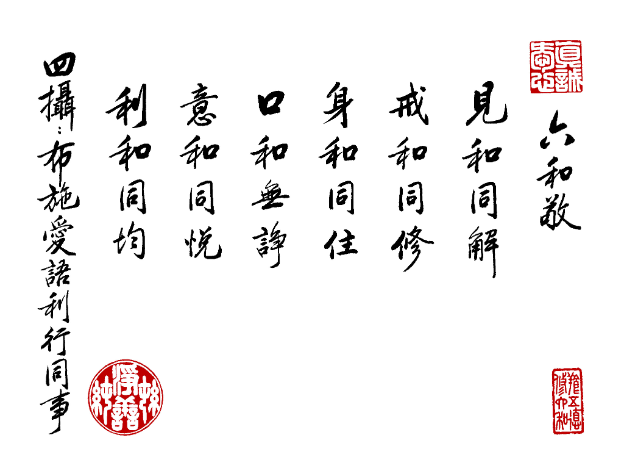
六和敬

  1. 見和同解
  2. 戒和同修
  3. 身和同住
  4. 口和無諍
  5. 意和同悅
  6. 利和同均

Six points of harmony and respect

  1. Harmony in view, through a shared understanding
  2. Harmony in the precepts, through common practice
  3. Harmony of the body, dwelling together
  4. Harmony of speech, without argument
  5. Harmony of mind, in shared joy
  6. Harmony in benefit, shared equally
六和敬

三學

  1. 戒
  2. 定
  3. 慧

三個根紮好,修六和敬,修戒定慧,能生凡聖同居土。

Three trainings

  1. Precepts
  2. Concentration
  3. Wisdom

With the three roots in place, the six harmonies, and the three trainings, one can be born in the land where ordinary beings and sages dwell together.

六度

  1. 布施
  2. 持戒
  3. 忍辱
  4. 精進
  5. 禪定
  6. 般若

六波羅蜜做到,往生方便有餘土。

Six perfections

  1. Giving
  2. Precepts
  3. Patience
  4. Diligence
  5. Meditation
  6. Wisdom

Accomplish the six perfections, and rebirth is in the land of expedient liberation.

普賢十願

  1. 禮敬諸佛
  2. 稱讚如來
  3. 廣修供養
  4. 懺悔業障
  5. 隨喜功德
  6. 請轉法輪
  7. 請佛住世
  8. 常隨佛學
  9. 恆順眾生
  10. 普皆迴向

十大願王都做到,生實報莊嚴土。

Samantabhadra’s ten vows

  1. Pay respect to all Buddhas
  2. Praise the Tathagatas
  3. Make offerings widely
  4. Repent karmic obstacles
  5. Rejoice in merit
  6. Request the turning of the Dharma wheel
  7. Request the Buddhas to remain in the world
  8. Follow the Buddhas in study always
  9. Accord with beings constantly
  10. Dedicate all merit everywhere

Fulfill the ten great vows, and one is born in the land of true reward and adornment.

修行沒有別的,就在日常生活當中。從早到晚,居家過日子,工作待人接物,起心動念不違背佛的教誨,依教奉行,真正落實,就成就了。

文摘恭錄_淨空老法師《淨土大經解演義》

Practice is nothing other than daily life. From morning to night, at home, at work, and with other people, do not let a thought depart from the Buddha’s teaching. Follow it and actually carry it out, and the practice is accomplished.

From Venerable Master Chin Kung’s lecture series on the Infinite Life Sutra.

往生事蹟

下面的故事,都是老法師在講經時引過的念佛往生事蹟,分成四類:佛典所記、祖師大德、不識字的念佛人,以及從極重惡業裡轉念的人。

The accounts below are ones Master Chin Kung told in his lectures. They fall into four groups: episodes in the sutras, masters, practitioners who could not read, and people who turned from very heavy negative karma.

佛典所記

上品上生

韋提希夫人

她自己在十方佛土裡選了極樂。五百宮女與她一同念佛,都是上品上生。

Highest of the high grade

Queen Vaidehi

Shown the Buddha-lands, she herself chose Ultimate Bliss. She and five hundred court women recited and were born in the highest of the high grade.

閱讀全文 收起

《觀無量壽佛經》說,韋提希夫人遭遇家庭與國家的變故,對人生灰心到了極點,求佛指示有沒有好的地方可以往生。釋迦牟尼佛把十方諸佛剎土變現在她面前,並不替她介紹,讓她自己看。她看完說:諸佛剎土雖然都很清淨莊嚴,我希望往生阿彌陀佛的極樂世界。這是她自己的選擇。佛非常歡喜,她接著請求去的方法。

佛沒有先講方法,先教她修三福,並且說這三福是「三世諸佛淨業正因」。三世諸佛成佛的法門各個不同,但沒有一個法門離得開這個基礎。好比蓋房子,無論多高、什麼樣式,地基相同。地基不好,決定蓋不成。念佛的人多,往生的人少,原因多半是地基沒做好:佛號念得不錯,人卻不是善人,與極樂不相應。

後來佛為她講十六觀,任何一種成就了都能往生,不是十六種都要學。韋提希夫人與五百宮女全部念佛往生,都是上品上生。這也證明善導所說:三輩九品,總在遇緣不同。

文摘恭錄_淨空老法師《淨土大經解演義》、《普賢行願品輯要疏菁華》

The Contemplation Sutra tells how Queen Vaidehi, after disaster in her family and her kingdom, despaired of this life and asked the Buddha whether there was a good place to be born. Shakyamuni displayed the lands of the Buddhas of the ten directions and did not recommend one. He let her look. She said that although every land was pure and adorned, she wished to be born in Amitabha's Land of Ultimate Bliss. The choice was hers. The Buddha was delighted, and she then asked for the method.

Before the method, he taught her the Three Blessings, and he said they are the true cause of the pure karma of the Buddhas of the three times. The Buddhas realize the Way by different doors, but none of those doors leaves this foundation. It is like raising a building: however tall, however shaped, the groundwork is the same. A poor foundation will not hold. Many people recite, and few are born in the Pure Land, mostly because the foundation was never laid. The name may be recited well, but the person is not yet a good person, and so does not accord with that land.

The Buddha then taught her the sixteen contemplations. Any one of them, brought to completion, is enough; one need not learn all sixteen. Vaidehi and her five hundred women of the court all recited and were born in the Pure Land, all in the highest of the high grade. It bears out what Shandao said: the three grades and nine ranks come down to the conditions one meets.

From Venerable Master Chin Kung’s lectures: the Infinite Life Sutra and Samantabhadra’s Practices and Vows

上品中生

阿闍世王

殺父害母,五逆十惡都做了。臨終真懺悔、真念佛,上品中生。

High grade, middle rank

King Ajatasatru

He killed his father and imprisoned his mother, and he committed the five rebellious acts. At the end he truly repented and truly recited, and he was born in the high grade, middle rank.

閱讀全文 收起

《觀無量壽佛經》裡的阿闍世王,受提婆達多挑唆。提婆達多嫉妒釋迦牟尼佛弘法的成就,總想破壞佛法、取而代之。他教當時還是太子的阿闍世發動政變:你做新王,我做新佛。阿闍世一時糊塗,奪了父親的王位,殺父、害母,把母親囚禁起來。殺父、害母、破和合僧、出佛身血,五逆十惡他都做了。這樣的罪,佛門一般的懺法懺除不了。

他到臨終才後悔,一心念阿彌陀佛,求生淨土,真的往生了。造作五逆十惡、本當墮阿鼻地獄的人,只要真懺悔、真回頭,這個法門仍救得了。《阿闍世王經》記他的生平。佛說他的品位是上品中生。這個例子讓人不敢輕視一個造罪的人:也許他臨終懺悔往生,品位還在我們之上。

往生有兩種人。一種平日念佛,斷惡修善,積功累德,九品往生。另一種臨終懺罪往生,品位完全看懺悔的心與力量。一念轉得快、轉得真,品位往往不可思議。道理只是一個:萬法唯心。

文摘恭錄_淨空老法師《大乘無量壽經》

In the Contemplation Sutra, King Ajatasatru was urged on by Devadatta. Jealous of what Shakyamuni had accomplished in teaching, Devadatta wanted to destroy the Dharma and take the Buddha's place. He told Ajatasatru, then still crown prince, to seize power: you will be the new king, and I the new Buddha. Confused for a time, Ajatasatru took his father's throne, killed his father, and imprisoned his mother. Killing a parent, breaking up the harmonious community, and shedding the Buddha's blood — he committed the five rebellious acts and the ten evils. Ordinary methods of repentance in the Buddha's teaching cannot clear a crime of that weight.

Only at the end of his life did he regret it. He recited Amitabha's name with a single mind, sought the Pure Land, and was truly born there. A person who has done what would send him to Avici hell can still be saved by this door, if the repentance is real and the turning is real. The Ajatasatru Sutra tells his life. The Buddha said his rank was the high grade, middle birth. The story is a warning not to look down on someone who has done wrong: at death he may repent, be born in the Pure Land, and rank above us.

Two kinds of people are born there. One kind recites through ordinary days, ceases from evil, cultivates good, and accumulates merit, and is born in one of the nine grades. The other repents at the very end. That rank depends entirely on the heart of the repentance and on its strength. Turn quickly and turn for real, and the rank is often beyond what one would expect. The principle is one: the ten thousand things are mind alone.

From Venerable Master Chin Kung’s lectures: the Infinite Life Sutra

祖師大德

捨仙方,歸淨土

曇鸞法師

他向菩提流支求長生之術,得到的是《觀無量壽佛經》。一聽就信,燒了仙經。

He burned the manuals of long life

Master Tanluan

He asked Bodhiruci for a way to live forever, and was given the Contemplation Sutra. He believed at once and burned his Daoist manuals.

閱讀全文 收起

南北朝的曇鸞,是淨土宗了不起的一位大師。他自幼受道教與佛教薰陶,十四歲到五臺山朝聖,隨即出家。他感嘆人生短促,為了健康長壽、完成弘法之願,長途跋涉去訪陶弘景,在茅山得到十卷長生仙方。後來遇見從印度來的菩提流支,他問:佛教裡有沒有長生不老的方法?菩提流支告訴他,真正的長生只有佛門才有。天上壽命雖長,最後仍要死;非想非非想天壽八萬大劫,劫盡依舊墮落。真正的無量壽,在西方極樂世界。

他善根深厚,聽了立刻接受,捨道教而歸淨土。菩提流支給他一卷《觀無量壽佛經》,教他依此修學。他把從前的仙經一把火燒掉,專修十六觀。

他著有《往生論註》等。他說極樂世界的菩薩與他方不同,不是一級一級往上爬。他方菩薩從初住升到十地,次第而上;極樂不是次第,是圓融的,頓成補處。讀到這一點,應當發大心,決定求生淨土,不辜負這一生希有的因緣。

文摘恭錄_淨空老法師《阿彌陀經疏鈔演義》

Tanluan, of the Northern and Southern Dynasties, was a remarkable master of the Pure Land school. From childhood he was steeped in both Daoism and Buddhism. At fourteen he made a pilgrimage to Wutai and then ordained. Feeling how short life is, and wishing for health and long life so that he could finish his work of teaching, he traveled far to find Tao Hongjing, and on Maoshan he received ten fascicles of Daoist manuals for longevity. Later he met Bodhiruci, come from India, and asked whether Buddhism had a way not to die. Bodhiruci said that true unending life is found only in the Buddha's teaching. Life in the heavens is long, but it ends; even the heaven of neither perception nor non-perception lasts eighty thousand great kalpas, and when the kalpas are over one falls. True infinite life is the Western Land of Ultimate Bliss.

His roots of goodness were deep. He accepted this at once, left Daoism, and turned to the Pure Land. Bodhiruci gave him the Contemplation Sutra and told him to practice by it. He burned the manuals he had studied and cultivated the sixteen contemplations alone.

He wrote a commentary on the Rebirth Treatise, among other works. He said the bodhisattvas of the Land of Ultimate Bliss are not like those elsewhere: they do not climb rank by rank. Elsewhere a bodhisattva rises from the first abiding to the tenth ground, step by step. In that land the path is not stepwise. It is perfectly interfused, and one suddenly arrives at the stage of a Buddha-to-be. Reading this, one ought to give rise to a great resolve, seek that land without wavering, and not waste the rare conditions of this life.

From Venerable Master Chin Kung’s lectures: the Commentary and Subcommentary on the Amitabha Sutra

銀臺隱去,金臺來迎

懷玉禪師

《阿彌陀經》念了三十萬遍。銀臺來迎時他還想金臺,於是再精進二十一天。

The silver dais vanished; a gold one came

Chan Master Huaiyu

He had recited the Amitabha Sutra three hundred thousand times. When a silver dais came for him, he still hoped for gold, and he practiced twenty-one days more.

閱讀全文 收起

懷玉禪師是台州人,一生穿粗布,日中一食,常坐不臥,睏了就打坐,精進念佛。《阿彌陀經》他念了三十萬遍。有一天,他見到清淨海眾如恆河沙,跟隨阿彌陀佛、觀音、勢至來迎接。佛手中的蓮臺是銀臺。金臺、銀臺表示品位高下,上品是金臺,銀臺次一等。懷玉說:我一生精進,心裡想的是金臺,沒想到來的是銀臺。這個念頭一動,銀臺就隱沒了。

他於是再加倍努力,日夜不斷念佛。過了二十一天,佛又來迎接,果然是金臺。這不是佛換了一個臺來接他,是他的功夫到了。

文摘恭錄_淨空老法師《阿彌陀經疏鈔演義》

Chan Master Huaiyu was from Taizhou. All his life he wore coarse cloth, ate one meal at noon, and sat rather than lay down; when he was tired he sat in meditation, and he recited with vigor. He had recited the Amitabha Sutra three hundred thousand times. One day he saw the pure ocean-wide assembly, numerous as the sands of the Ganges, coming with Amitabha, Guanyin, and Great Strength to receive him. The lotus dais in the Buddha's hand was silver. Gold and silver mark the rank: the high grade is a gold dais, and silver is the next. Huaiyu said: I have practiced hard all my life, and what I hoped for was gold; I did not expect silver. As soon as that thought moved, the silver dais disappeared.

He doubled his effort and recited day and night without a break. After twenty-one days the Buddha came again, and this time the dais was gold. It was not that the Buddha had exchanged one dais for another. Huaiyu's practice had reached it.

From Venerable Master Chin Kung’s lectures: the Commentary and Subcommentary on the Amitabha Sutra

不識字的念佛人

不認識字,活著走

修無師

傳戒期中來照顧病人。做了幾天,向住持告假:我不是要走,我要去極樂世界。

He could not read, and he left while still well

Monk Xiuwu

During an ordination he came to nurse the sick. After a few days he asked leave of the abbot: he was not going somewhere else. He was going to the Land of Ultimate Bliss.

閱讀全文 收起

倓虛法師在《念佛論》裡講過哈爾濱極樂寺修無師的事。極樂寺落成,以開堂傳戒為慶,請諦閑老法師當得戒和尚。修無師從外地趕來,發心在戒期幫忙。當家定西法師問他能做什麼,他說願意照顧生病的戒子。他不認識字,出家前是泥水匠,不懂經教,就老實念佛。待人謙虛恭敬,苦活也歡喜做。

沒幾天,他向倓老與定西告假。定西責備他沒有恆心。他說:我不是到別處去,我要到極樂世界去,請老和尚預備一兩百斤柴,好火化。定西問大概多久,他說十天左右。第二天他又來說:我今天就要走,能否請幾位法師助念?大家聽說有人沒有生病、活著往生,都願意送。有人請他留一首偈。他說:我是苦惱人,不認識字,也不會作詩,只有一句老實話——能說不能行,不是真智慧。助念不到一刻鐘,他告訴大家佛來接了,就走了。火化後有舍利子。諦閑老法師非常讚歎。

文摘恭錄_淨空老法師《大方廣佛華嚴經》

In his talk on Buddha-recitation, Master Tanxu told of Monk Xiuwu at the Temple of Ultimate Bliss in Harbin. When the temple was finished, the celebration was an ordination, and Master Dixian was invited to be the preceptor. Xiuwu came from elsewhere and offered to help. The manager, Master Dingxi, asked what he could do. He said he would look after novices who fell ill. He could not read. Before ordaining he had been a plasterer. He did not know the teachings, so he recited honestly. He was humble with people, and he was glad to do the hard work others would not.

After a few days he asked leave of Tanxu and Dingxi. Dingxi scolded him for lacking perseverance. He said he was not going somewhere else; he was going to the Land of Ultimate Bliss, and he asked the elder to prepare a hundred or two hundred jin of firewood for the cremation. Dingxi asked how long. About ten days, he said. The next day he came again: he would leave that very day, and could a few monks recite with him? When the assembly heard that someone still in health was to be born in the Pure Land, they were glad to see him off. Someone asked him to leave a verse. He said he was a man of hardship, he could not read, and he could not make a poem; he had only one honest sentence — one who can talk and cannot do it has no true wisdom. They had not recited a quarter of an hour when he told them the Buddha had come, and he left. After the cremation there were relics. Master Dixian praised him highly.

From Venerable Master Chin Kung’s lectures: the Avatamsaka Sutra

一句佛號,三年

鍋漏匠

不認識字,四十多歲才出家。諦閑只傳他六字佛號。他念了三年,站著走。

One name, for three years

The pot-mender

He could not read, and he ordained past forty. Dixian taught him only the six-character name. He recited for three years and died standing.

閱讀全文 收起

諦閑老和尚有一個徒弟,是補鍋補碗的,生活極苦。他覺得人生太苦,去找同鄉、幼年玩伴諦閑,求出家。老和尚說他四十多歲,不認識字,人又笨,不能出家。他非出家不可。老和尚說:真要跟我出家,就得答應一個條件——我教你怎麼做,你就怎麼做。他答應了。

剃度之後,老和尚不讓他住寺廟,因為五堂功課他學不會,大眾會嫌他。老和尚在鄉下找一間沒人住的破廟,請幾位護法每月送一點糧食,又有一位老太婆每天為他燒午晚兩頓飯。老和尚只傳「南無阿彌陀佛」六個字:一直念,念累了就休息,休息好了再念。他真的聽話,三年沒有出門,像閉關一樣。念了三年,預知時至,站著往生。

前一天他對燒飯的老太婆說,明天不用來了。那天他出過門,其實是去向人辭行。第二天中午老太婆還是來了,喊他不應,走到後面,見他站著,手裡拿著念珠,已經走了。護法來看,立刻通知諦閑。老和尚往返三天,他在那裡站了三天。諦閑讚歎:你沒有白出家。講經的法師不如你,名山的方丈住持也不如你。一句阿彌陀佛,三年成就。

文摘恭錄_淨空老法師《阿難問事佛吉凶經》

Master Dixian had a disciple who mended pots and bowls and lived in great poverty. Finding life too bitter, he sought out Dixian, a townsman and a childhood friend, and asked to ordain. The elder said he was past forty, could not read, and was slow; he could not ordain. He would not be refused. Dixian said: if you truly want to ordain with me, you must accept one condition — you will do exactly as I teach. He agreed.

After tonsure, Dixian would not house him in a temple. He could not learn the daily liturgies, and the community would resent him. Dixian found an abandoned shrine in the countryside, asked a few patrons to send a little grain each month, and an old woman cooked his noon and evening meals. Dixian taught him only the six characters Namu Amitabha: recite straight on; when you are tired, rest; when you have rested, recite again. He truly listened. For three years he did not go out the door. It was like a retreat. After three years he knew the time, and he died standing.

The day before, he told the woman who cooked for him not to come the next day. That day he had gone out — in fact to take his leave of people. At noon the next day she came anyway, called, and got no answer. She went to the back and found him standing, beads in hand, already gone. The patrons sent word to Dixian at once. The journey there and back took three days, and the man was still standing when the elder arrived. Dixian said: your ordination was not wasted. Lecturers do not come up to you, nor do the abbots of famous mountains. One name of Amitabha, and three years were enough.

From Venerable Master Chin Kung’s lectures: the Sutra in Which Ananda Asks about the Auspicious and the Inauspicious in Serving the Buddha

打一下鐵,一聲佛

王打鐵

湖南衡陽的鐵匠,不認識字。打鐵三年,站著往生,滿室異香。

One strike of the hammer, one recitation

Blacksmith Wang

A blacksmith in Hengyang, Hunan, who could not read. After three years at the forge he died standing, and the room was full of an unusual fragrance.

閱讀全文 收起

圓瑛法師在《阿彌陀經》註解裡引過王打鐵的故事。湖南衡陽有一位鐵匠,一家四口,生活很苦,天天做工賺錢。他自己知道苦,也真正覺悟了。一天有位出家人經過,他請到鋪裡,說:生活太苦,想學佛,沒有錢供養,工作又不能停,有沒有辦法?法師告訴他:念阿彌陀佛,求生西方就好。不花錢,不用跑廟,也不耽誤時間。他聽了很歡喜,就照做。鐵槌打下去一聲佛,提起來一聲佛,風箱推進拉出都是阿彌陀佛。

太太說:打鐵已經很累,嘴裡還念,不是更累嗎?他說:從前真累,現在一念佛,精神百倍。這樣念了三年。有一天他說要回家。太太說這裡就是家。他說家在西方極樂世界。接著又打了一會兒鐵,念了一首偈。這個人沒念過書,臨走卻說:「叮叮噹噹,久煉成鋼,太平將近,我往西方。」槌子落下,人站著走了。滿室異香,鄰居都來圍觀。衡陽一帶念佛風氣特別盛,就是因為他做了這個榜樣。不認識字,念佛三年,走得自在。

文摘恭錄_淨空老法師《阿彌陀經疏鈔演義》

In his commentary on the Amitabha Sutra, Master Yuanying told of Blacksmith Wang. In Hengyang, Hunan, there was a blacksmith with a wife and two children. Life was hard, and he worked every day for a little money. He knew the hardship, and he truly woke up. One day a monk passed his shop. He asked the monk in and said: life is too bitter, I want to learn the Buddha's teaching, I have no money to give, and I cannot stop working — is there a way? The monk said: recite Amitabha and seek the Western Land. It costs nothing, you need not run to temples, and it does not take time from your work. He was glad, and he did it. The hammer came down on one recitation and rose on another; the bellows pushed in and drew out to the name of Amitabha.

His wife said: the forge is already exhausting, and reciting as well will only tire you more. He said: I used to be truly tired; now, as soon as I recite, my spirits are a hundred times stronger. He went on this way for three years. One day he said he was going home. His wife said this was home. He said his home was the Western Land of Ultimate Bliss. He worked a little longer and spoke a verse. He had never been to school, but at the end he said: ding-ding dong-dong, long forging makes the steel; peace is near, and I am going west. The hammer fell, and he died standing. An unusual fragrance filled the room, and the neighbors crowded in to see. Recitation became especially widespread around Hengyang because he had given them this example. He could not read. Three years of the Buddha's name, and he left at ease.

From Venerable Master Chin Kung’s lectures: the Commentary and Subcommentary on the Amitabha Sutra

重業轉念

未滿十聲

張善和

唐朝的屠戶,一生殺牛。臨終見牛頭人來討命,出家人教他念佛,未滿十聲就走了。

Before he had recited ten times

Zhang Shanhe

A Tang-dynasty butcher who had spent his life killing oxen. At the end, ox-headed beings came for his life. A monk told him to recite. He was gone before the tenth recitation.

閱讀全文 收起

唐朝張善和是個屠戶,殺牛為業,一生殺了多少牛,自己也不知道。古時候殺生之中,殺牛的罪最重,因為牛一生為農人耕作。臨終時,他看見許多牛頭人來討命,心生恐怖,大聲呼救。《往生傳》記載,剛好有一位化緣的出家人經過門口,問他為什麼叫。他說有許多牛頭人來討命。出家人點了一把香交給他,叫他趕緊念阿彌陀佛,求生西方極樂世界。

他大聲念佛,未滿十聲,說:牛頭人不見了,阿彌陀佛來接我了。他就跟著走了。像張善和這樣的人,這一生沒有學佛,聽出家人一開示就相信,就真發願、真念。這種善根是多生多劫修來的。作惡而臨終念佛往生,也說明這個法門的殊勝。

文摘恭錄_淨空老法師《阿彌陀經疏鈔演義》

In the Tang, Zhang Shanhe was a butcher. His trade was killing oxen, and he himself did not know how many he had killed. Among acts of killing, the killing of oxen was held to be the heaviest, because an ox spends its life pulling the farmer's plow. At the end he saw many ox-headed beings coming to claim his life. He was terrified and cried out for help. The Accounts of Rebirth say that a monk collecting offerings happened to pass the door and asked why he was shouting. He said ox-headed beings had come for him. The monk lit a stick of incense, put it in his hand, and told him to recite Amitabha at once and seek the Western Land of Ultimate Bliss.

He recited aloud. Before he had finished ten recitations he said: the ox-headed beings are gone, and Amitabha has come for me. He left with the Buddha. A man like Zhang Shanhe had not studied the Buddha's teaching in this life. He heard one instruction and believed it, made the vow for real, and recited for real. Roots of goodness of that kind are cultivated over many lives. That someone who has done such harm can recite at the end and be born in the Pure Land is also a measure of how extraordinary this door is.

From Venerable Master Chin Kung’s lectures: the Commentary and Subcommentary on the Amitabha Sutra

三天三夜,把佛念來

瑩珂法師

破戒,什麼規矩都犯。因為知道自己會墮地獄,關起門來念了三天三夜。

Three days and nights, until the Buddha came

Dharma Master Yingke

He had broken the precepts and kept none of the rules. Because he knew he was bound for hell, he shut his door and recited for three days and three nights.

閱讀全文 收起

宋朝瑩珂法師破戒,不守清規,戒律規矩大概都犯了。他有一點長處:知道自己造罪,知道將來一定墮地獄,因此害怕。他向同參請教有沒有辦法不墮地獄。一位同學拿《往生傳》給他看。他讀了非常感動,下決心念佛求生淨土。

傳記說,他把房門關上,一句佛號念到底,不睡、不吃,念了三天三夜,把阿彌陀佛念來了。佛告訴他:你還有十年陽壽,好好修行,臨終我再來接。瑩珂說:我習氣太重,經不起誘惑,十年還不知要犯多少罪。十年壽命我不要了,現在就跟你走。佛答應了:好,三天之後我來接你。

他開門告訴大眾:三天之後我就往生。寺裡的人覺得這個惡人怎麼可能三天往生,姑且等著看。到第三天早課,他沐浴,換了乾淨衣服,請同修當天改念《阿彌陀經》與佛號送他。佛號念了約一刻鐘,他說阿彌陀佛來了——他看得見,別人看不見——向大家告假,就走了。沒有生病。

這樁事說明《阿彌陀經》所講的若一日、若二日,乃至若七日,是真的。平日盡做壞事,一句佛也不念,三天也可以往生。我們關起門念三十天也不能走,是因為心不真,佛號裡夾著妄想。瑩珂知道地獄可怕,不往生就要墮下去,兩條路沒有第三條,所以全心全力求生。縱然過去生或這一生造了罪業,只要信、願、行三個條件真正具足,也能在這一生得度。

文摘恭錄_淨空老法師《大方廣佛華嚴經》

In the Song, Dharma Master Yingke broke the precepts and kept none of the rules; he had more or less committed them all. He had one strength: he knew he had created offense, and he knew he was bound for hell, and so he was afraid. He asked his fellow monks whether there was a way not to fall. One of them gave him the Accounts of Rebirth. He was deeply moved and resolved to recite and seek the Pure Land.

The record says he shut his door and recited one Buddha-name to the end. He did not sleep and he did not eat. For three days and three nights he recited, until Amitabha came. The Buddha told him: you still have ten years of life. Practice well for those ten years, and I will come for you at the end. Yingke said: my habits are too heavy, and I cannot withstand temptation. In ten years I do not know how many offenses I would add. I do not want those ten years. I will go with you now. The Buddha agreed: in three days I will come for you.

He opened the door and told the community he would be born in the Pure Land in three days. The monastery thought it impossible that such a man could go in three days, and they waited to see. On the third day, at the morning liturgy, he bathed, put on clean clothes, and asked his companions to chant the Amitabha Sutra and the Buddha's name to see him off. After about a quarter of an hour of the name he said Amitabha had come — he could see it; the others could not — took his leave, and left. He had not been ill.

What he showed is that the Amitabha Sutra means what it says: one day, two days, up to seven days. A person who has done wrong all along, and has not recited a single time, can still be born there in three days. We may shut the door for thirty days and still be unable to go, because the mind is not genuine and stray thoughts are mixed into the name. Yingke knew what hell is. If he did not go to the Pure Land he would fall, and there was no third road, so he sought birth with his whole mind. Even if one has created offense in past lives or in this one, when faith, vow, and practice are truly present, this life can still be the life of liberation.

From Venerable Master Chin Kung’s lectures: the Avatamsaka Sutra